
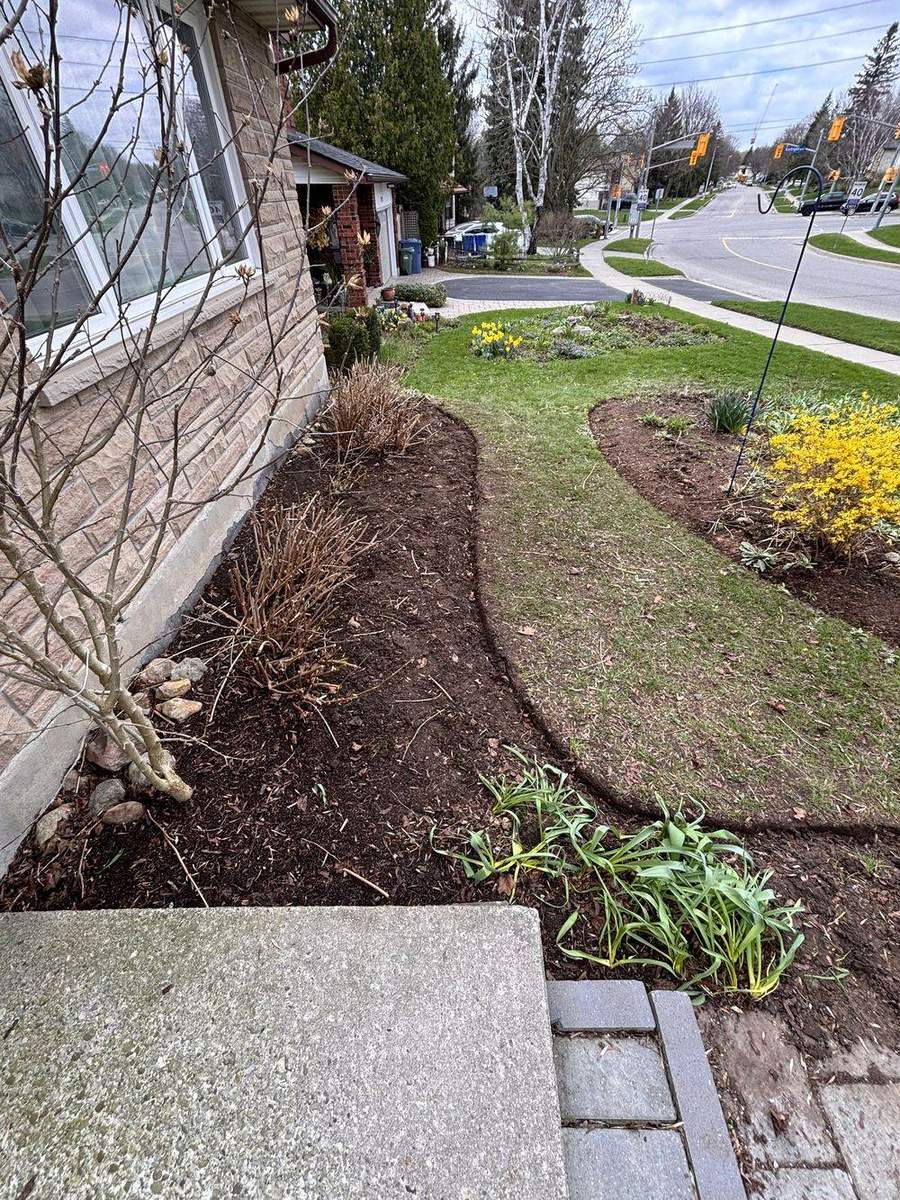
Patchy lawns all look the same from the sidewalk, but the fixes are completely different depending on the cause. Diagnose first — here are the usual suspects on Guelph properties.
Compacted soil
Guelph’s clay-heavy soil compacts under traffic until roots physically can’t penetrate. Telltale: thin grass along walkways, play areas and the path the dog runs. Fix: core aeration, then overseed straight into the holes.
Cutting too short
Scalped lawns thin out and let crabgrass in. If your lawn is cut below 2.5 inches regularly, the patchiness is self-inflicted — raise the deck to 3 inches and much of it recovers on its own. (Here’s why.)
Dog spots
Round dead patches with dark green rings are nitrogen burn from dog urine. Rake out the dead centre, flush with water, add a little topsoil and reseed. Prevention is mostly about watering the spot promptly — no supplement gimmick required.
Grubs
If turf peels back like carpet in late summer or fall — or skunks are digging your lawn at night — suspect white grubs eating the roots. The durable fix is thick, deep-rooted turf plus overseeding damaged areas; badly hit sections may need renovation.
Deep shade
Under mature trees, sometimes grass simply loses. Overseed with shade-tolerant fescue blends, mow that area higher, or concede gracefully and mulch a clean bed around the trunk — it looks better than thin grass ever will.
Not sure which one you’ve got? Send photos with a quote request and we’ll tell you straight — including if it’s something you can fix yourself.
Related reading: Does Your Guelph Lawn Need Aeration? Three Tests to Find Out · When to Fertilize Your Lawn in Ontario: A Guelph Homeowner’s Schedule