
Ask why a lawn looks thin, weedy, or brown by mid-July, and the answer is very often the same: it’s being cut too short. Here’s why every lawn on our route gets cut at about 3 inches — and why we won’t scalp yours even if you ask nicely.
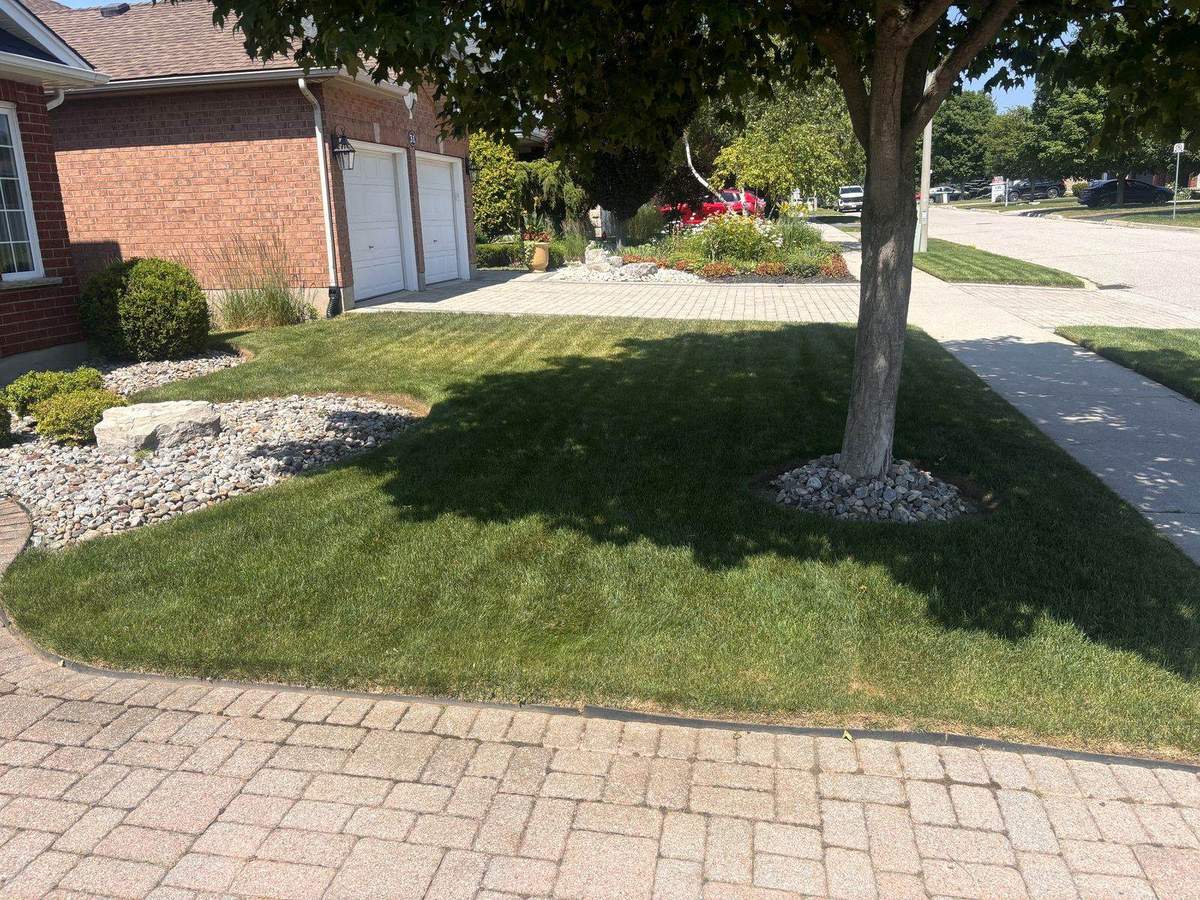
Long grass is strong grass
Grass blades are solar panels. Cut them short and the plant has less energy to build roots; cut them at 3 inches and root systems grow deep enough to find water in dry spells and survive Guelph winters. The City of Guelph’s own lawn guidance points the same direction: set the mower high and mow when the lawn reaches about 4.5 inches, so you’re never removing more than a third of the blade.
The one-third rule
Removing more than a third of the blade in one cut shocks the plant — it stops root growth and dumps energy into emergency regrowth. That’s the real argument for weekly mowing in peak season: it’s not about more visits, it’s that weekly cutting is the only way to stay inside the one-third rule when grass is growing fast. It’s also why an overgrown “first cut” takes us longer: we’d rather step it down over two visits than butcher it in one.
Short cutting invites weeds
Crabgrass and most lawn weeds need sunlight hitting bare soil to germinate. A dense 3-inch canopy shades the soil surface and simply out-competes them. Homeowners spend real money fighting weeds that a higher mower deck would have prevented for free.
What this means on your invoice
Nothing extra — 3-inch cutting, the one-third rule, and mulched clippings (free fertilizer, incidentally) are just how our weekly mowing works, from $27.50 per cut. In drought, we raise the deck slightly and slow the schedule; in peak spring growth, weekly keeps everything healthy. Your lawn gets agronomy, not just a haircut.
Related reading: How Often Should You Mow Your Lawn in Guelph?